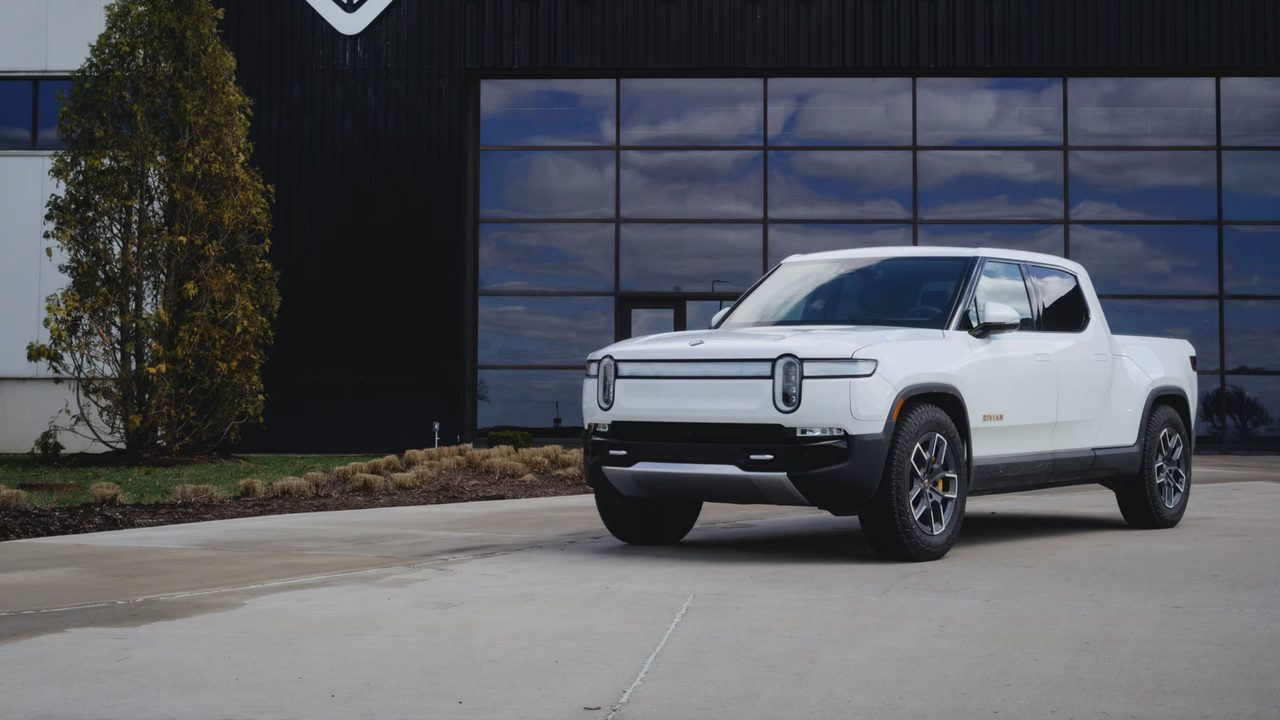
There is a version of this story where you read the headline, note that Rivian and Redwood Materials are turning old battery packs into a factory energy storage system, and move on. Ten megawatt-hours is not a large number. It is not going to reshape the American power grid. But the model behind the announcement is worth sitting with, because it points to something the industry has been circling for years without quite landing on.
According to a joint announcement from Rivian and Redwood Materials, the two companies are deploying more than 100 second-life battery packs at Rivian's Normal, Illinois manufacturing plant, using Redwood's in-house power management technology to dispatch stored energy during peak demand. The goal is straightforward: cut electricity costs when the grid is most expensive to draw from, and take some load off the local network at the same time.
The grid problem is real and getting worse faster than expected
New transmission infrastructure in the United States takes, on average, somewhere between five and twelve years from approval to completion, depending on who you ask and which project you are tracking. That timeline has not meaningfully shortened in the past decade despite considerable political attention. Meanwhile, industrial electricity demand is rising sharply as manufacturing electrifies, data centers expand, and EV charging load grows. The math does not work in the near term without bridging solutions.
This is the gap that second-life batteries are genuinely well suited to fill. They do not require new mining, new cell manufacturing, or years of permitting. They exist already. The question has always been whether the logistics and economics of extracting, testing, repackaging, and deploying them at scale actually pencil out. Redwood's argument, and increasingly the data from other deployments, is that they do.
This is not the first time someone has tried this, but the model here is different
Other manufacturers have experimented with second-life battery programs. Nissan partnered with a European energy company roughly a decade ago to stack retired Leaf packs into grid storage. BMW has run trials using repurposed i3 batteries as buffer storage at charging sites. Volkswagen built a mobile fast charger using old Golf GTE packs. These projects were real and they worked technically, but they all shared a common structure: the OEM hands the packs off to a third party who then figures out what to do with them.
What Rivian and Redwood are doing is structurally tighter. The packs are going back into the facility that built the vehicles they came from. That closed loop matters for a few reasons. Rivian knows exactly what those packs were put through because Rivian built the cars and, in theory, has data on how each one was used. Redwood, founded by former Tesla CTO JB Straubel, already operates battery recycling at industrial scale, which means the Pack Manager technology deployed here is not a prototype. It is downstream of years of actual battery handling experience. When this system eventually reaches end of stationary-storage life, Redwood is positioned to recycle it too. The material stays in the loop.
Why Straubel's involvement matters
Straubel has been making the case for second-life batteries as a serious industrial asset since at least the mid-2010s, well before it was fashionable. His credibility on battery systems is unusually high. The risk with second-life programs is almost never the chemistry; it is the software, the safety management, and the economics of handling packs that were designed for vehicles, not stationary service. Redwood has been working on exactly those problems. The Rivian partnership is a validation of that work on a commercial scale, not a research pilot.
What to watch
The more interesting question is whether other OEMs follow, and at what speed. Ford, GM, and Stellantis all have large domestic manufacturing footprints and accumulating stocks of retired packs from early EV programs. None have announced a comparable closed-loop program. If the Normal deployment demonstrates measurable cost savings over the next 12 to 24 months, it becomes harder for other manufacturers to ignore, particularly given current pressure on production economics across the industry.
The other variable is policy. The Inflation Reduction Act created incentives for domestic energy storage deployment, and second-life battery systems may qualify depending on how projects are structured. That is worth watching as the regulatory picture around battery reuse continues to develop. Rivian did not confirm whether the Normal project is seeking any IRA-related credits.
Ten megawatt-hours is a modest start. The significance is not the size. It is that the loop now exists, and someone credible built it.